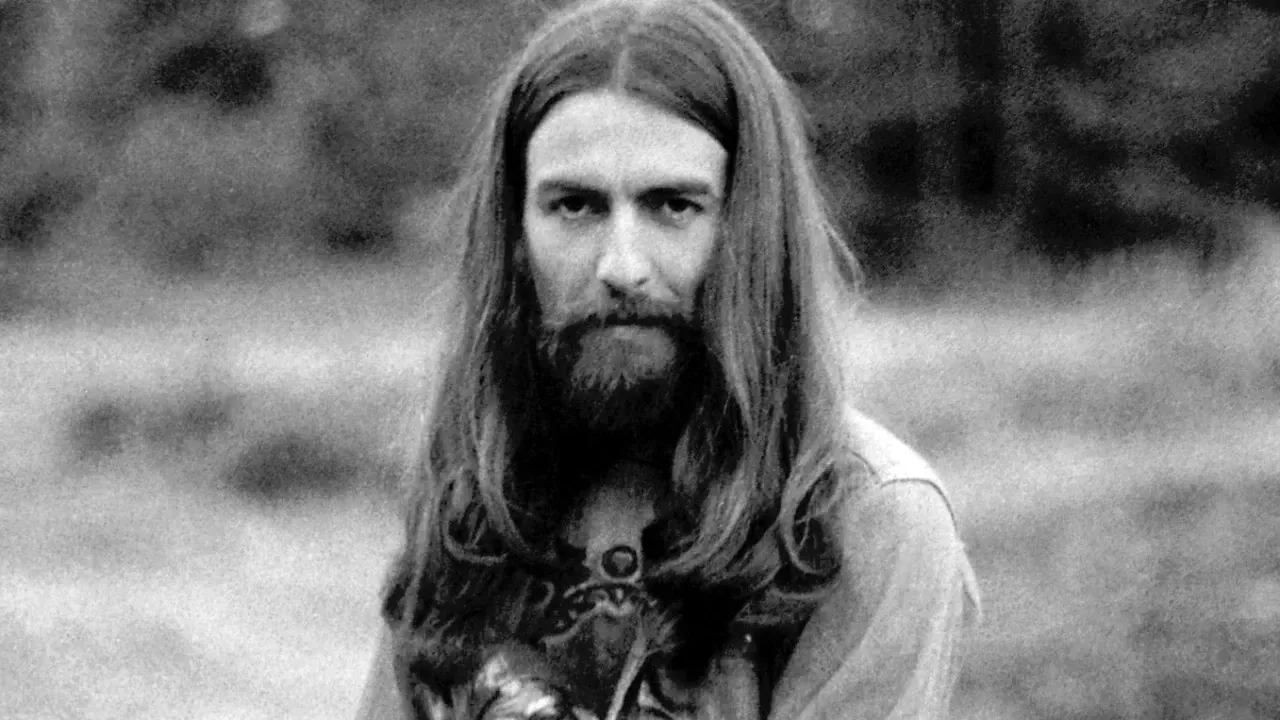
The Beatles were four very different kinds of intelligence sharing one very small stage. John Lennon had the razor — the cutting wit, the political fury, the ability to say the true and dangerous thing with a precision that left no room for comfortable misunderstanding. Paul McCartney had the gift — the melodic instinct so natural and so prolific that it sometimes seemed less like talent and more like a permanent open channel to some inexhaustible source of beautiful noise. Ringo Starr had the human quality — the warmth and the humor and the groundedness that kept four enormous personalities from destroying each other completely.
And George Harrison had wisdom. Actual wisdom. Not performed wisdom, not the wisdom of someone who has read the right books and learned to speak in the appropriate register — but the real thing. The hard-won, deeply considered, spiritually grounded understanding of what matters and what doesn’t that most people spend their entire lives approaching without ever quite arriving.
He had it young. That is the remarkable thing. He had it in his twenties, which is not when wisdom usually arrives, and he had it while living inside the most insane circumstances that popular culture has ever produced. He had it while being a Beatle — while existing at the center of a storm of fame and creativity and conflict and money and expectation that would have distorted anyone’s sense of reality — and he used it, quietly and consistently, to stay more or less himself when everything around him was trying to turn him into something else.
1. He learned the sitar. When the Beatles were at the absolute peak of their fame — when every decision they made was commercial, when the pressure to repeat what was working was enormous — Harrison spent months studying an instrument with Ravi Shankar that had no obvious commercial application and required a humility almost impossible to maintain when you are one of the four most famous people on earth. He did it because the music interested him. Because growing interested him more than consolidating. This is a wisdom most people cannot access at any age.
2. He gave the money away. The Concert for Bangladesh in 1971 — organized by Harrison in response to a humanitarian crisis — was the first major charity rock concert in history. He did not do it for profile. He was, at that point, actively trying to reduce his public profile rather than increase it. He did it because someone he respected asked him to help and he understood that the resources he had access to were disproportionate to anything he had earned and could be used for something real.
3. He told the truth about fame. While Lennon raged against it and McCartney managed it and the machinery of celebrity continued to grind, Harrison simply said what it was. In interviews throughout the 1970s and 1980s he described fame with a clarity and an absence of either resentment or attachment that was remarkable — as something that had happened to him, that he had survived, that was neither the point of his life nor the destruction of it.
4. He made “All Things Must Pass.” The triple album released in 1970 — containing years of songs the Beatles had never recorded, songs that Lennon and McCartney had not made room for — is one of the great statements in rock history. Not just musically but philosophically. The title track is a teaching. An actual teaching, delivered in the form of a pop song, about the impermanence of everything including grief and including joy. He was twenty-seven years old when he recorded it. Most people never fully understand what it’s saying at any age.
5. He died as he lived. George Harrison was diagnosed with cancer in the late 1990s. He handled it with a transparency and a peacefulness that people around him found both inspiring and almost impossible to comprehend. He kept making music. He kept tending his garden at Friar Park, the estate he had transformed over decades into something extraordinary. He said things about death in his final interviews that did not sound like bravery or denial — they sounded like someone who had genuinely worked out, through years of spiritual practice and honest self-examination, what he thought was actually happening and had made his peace with it.
He died in November 2001. His family said that he was conscious and peaceful. That he died with the same quality of presence he had brought to everything.
John had the wit. Paul had the melody. But George had the thing underneath all of it — the understanding of what the music was actually for and what the life around it was actually worth.
He always had it. We just weren’t always paying close enough attention to see it.