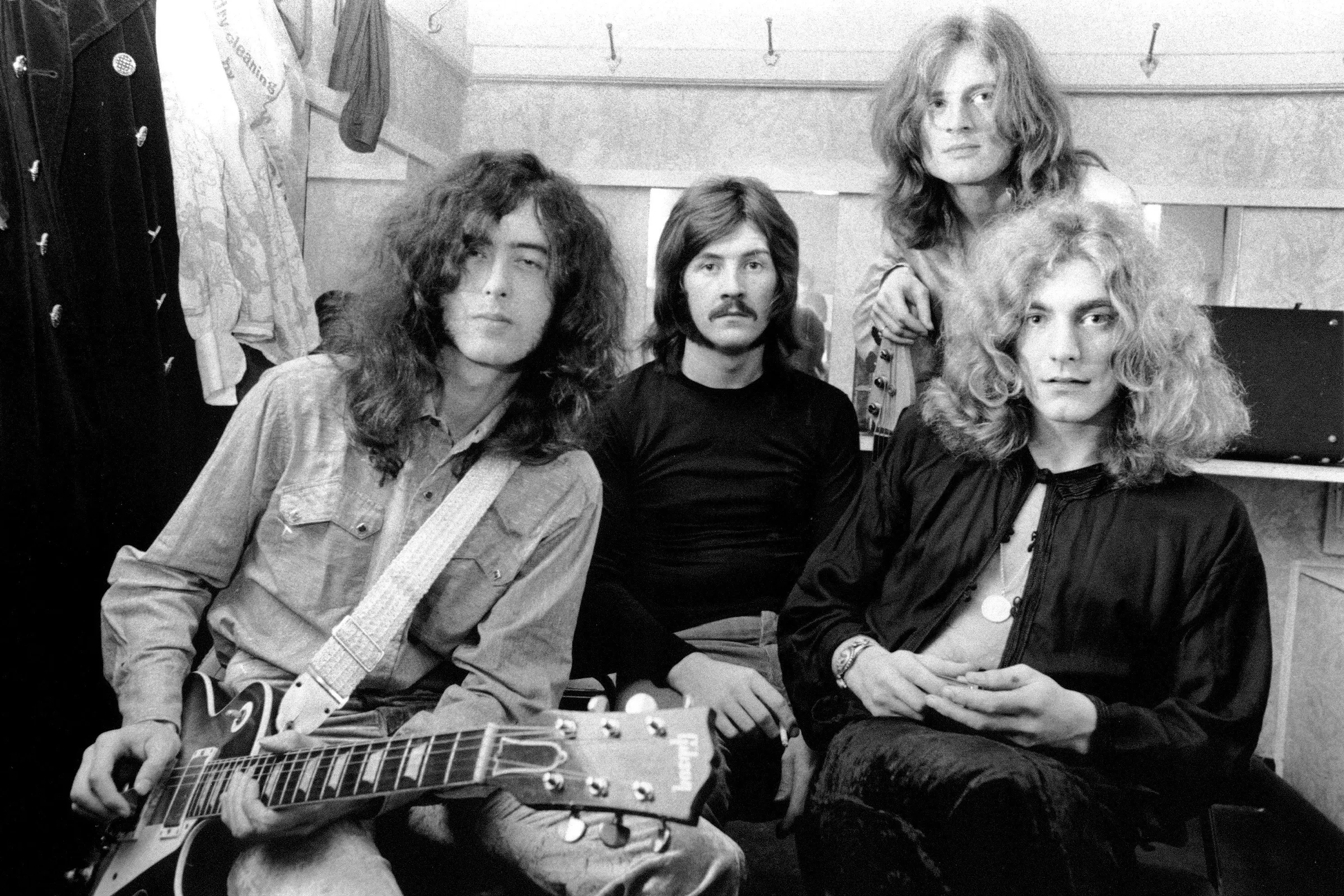
Rock history is full of carefully planned masterpieces, but sometimes the greatest songs emerge from accidents, improvisation, or moments that almost never happened at all. Few bands embodied this unpredictability better than Led Zeppelin. Throughout their career, the legendary quartet frequently stumbled into creative breakthroughs that would go on to define not only their own legacy but the future of rock music itself.
Some of their most iconic songs were born from spontaneous jam sessions, abandoned ideas, studio experiments, or pure chance. Had circumstances been slightly different, these tracks might never have been recorded.
Here are five Led Zeppelin songs that were never supposed to exist—and changed rock music forever because of it.
1. “Rock and Roll” (1971)
One of the most recognizable rock anthems of all time began as a complete accident.
While recording at Headley Grange for Led Zeppelin IV, the band was working on another song when drummer John Bonham started playing the drum intro from Little Richard’s “Keep A-Knockin’.” Guitarist Jimmy Page immediately joined in, and within minutes the group had developed the framework for what would become “Rock and Roll.”
The song was never part of the original plan for the album. It emerged from a spontaneous studio moment and evolved into one of the definitive celebrations of rock music itself.
Its influence can still be heard in countless hard rock and classic rock recordings more than five decades later.
2. “Black Dog” (1971)
The famous stop-and-start riff that opens “Black Dog” almost never materialized.
The song grew from a complex riff created by bassist and keyboardist John Paul Jones, who was inspired by intricate blues structures and progressive musical arrangements. The band spent considerable time figuring out how to make the unusual rhythm work, with the instruments and vocals intentionally weaving around each other.
What could have remained an unfinished experiment became one of Zeppelin’s most innovative recordings. The song challenged conventional rock songwriting and demonstrated that heavy music could also be sophisticated and unpredictable.
Today, “Black Dog” remains a masterclass in tension, groove, and musical creativity.
3. “Kashmir” (1975)
Ironically, Led Zeppelin’s epic masterpiece wasn’t inspired by Kashmir at all.
Robert Plant wrote the lyrics after traveling through a remote desert region in southern Morocco. The hypnotic musical foundation developed from a Page riff that had been sitting unfinished for years. For a long time, nobody knew what to do with it.
When the band finally revisited the idea during sessions for Physical Graffiti, everything clicked. The result was a towering composition unlike anything else in rock music at the time.
Its orchestral grandeur, exotic atmosphere, and relentless rhythm helped expand the possibilities of hard rock and influenced generations of artists from heavy metal bands to film composers.
4. “When the Levee Breaks” (1971)
The song’s legendary sound came from a recording experiment that wasn’t intended to become history.
Originally a blues tune by Memphis Minnie and Kansas Joe McCoy, Led Zeppelin transformed it into something entirely new. During sessions at Headley Grange, engineer Andy Johns placed John Bonham’s drums in a stairwell and captured the massive natural echo using distant microphones.
The resulting drum sound was unlike anything heard before.
What started as an attempt to utilize the building’s acoustics produced one of the most sampled and influential drum recordings ever made. Decades later, artists in rock, hip-hop, electronic music, and pop continue to draw inspiration from that thunderous groove.
5. “Stairway to Heaven” (1971)
Perhaps the greatest rock song ever recorded emerged from fragments of unfinished ideas.
Jimmy Page had been developing various acoustic and electric passages without a clear destination. During rehearsals at Headley Grange, the pieces gradually came together while Robert Plant simultaneously began writing lyrics.
No one entered the sessions intending to create an eight-minute epic that would become rock’s most famous song.
Yet the combination of folk, blues, hard rock, and poetic storytelling created something unprecedented. “Stairway to Heaven” became a cultural phenomenon, redefining what rock songs could achieve artistically and commercially.
More than fifty years later, it remains one of the most celebrated compositions in music history.
The Legacy of Happy Accidents
Led Zeppelin’s story proves that some of the greatest moments in music cannot be planned. While many artists rely on meticulous preparation, Zeppelin often found magic through experimentation, spontaneity, and a willingness to follow unexpected ideas wherever they led.
The fact that songs like “Rock and Roll,” “Kashmir,” “When the Levee Breaks,” “Black Dog,” and “Stairway to Heaven” nearly never happened makes their impact even more remarkable.
Rock music would sound very different without them—and that’s exactly what makes these accidental masterpieces so extraordinary.