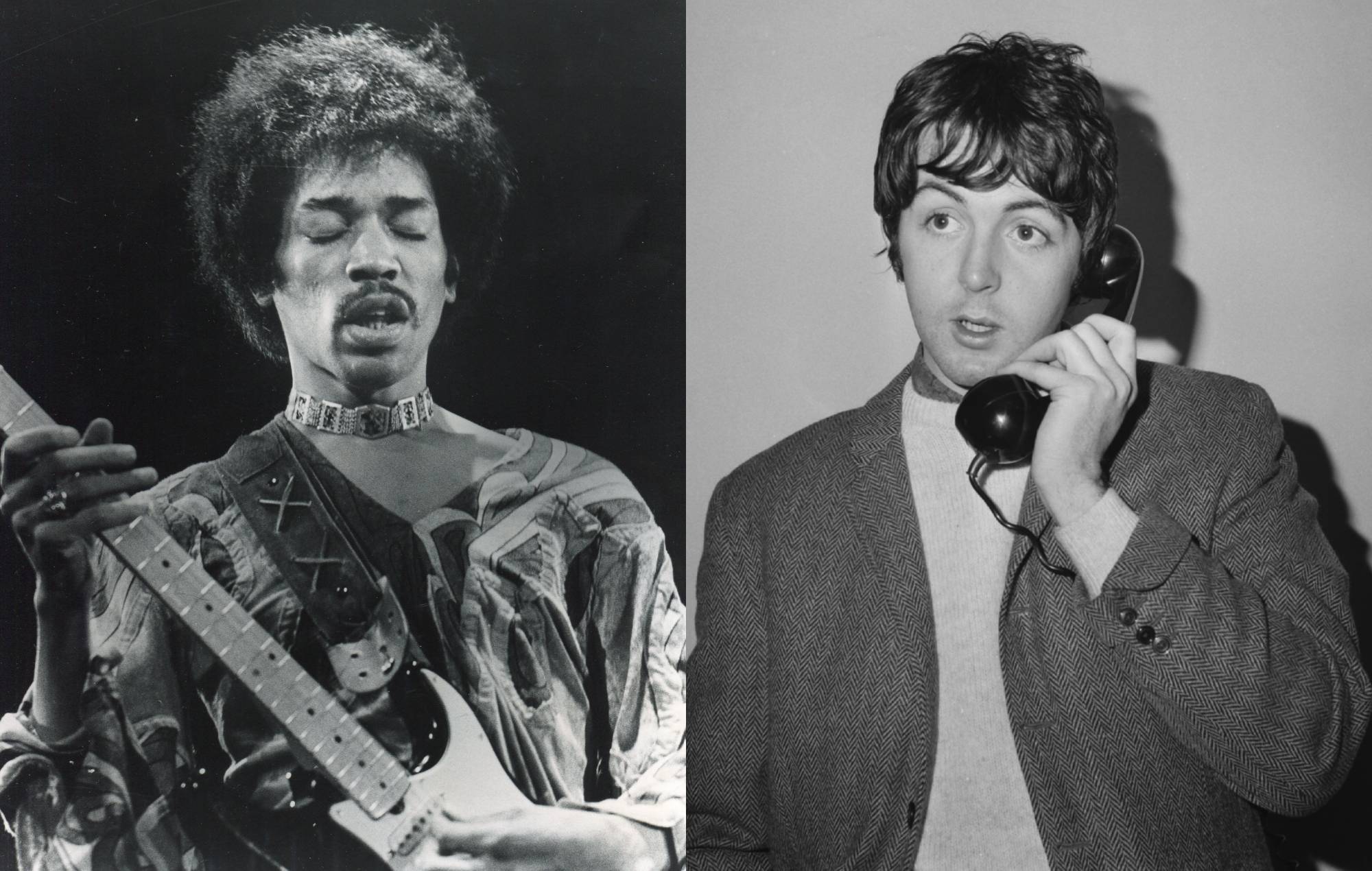
Jimi Hendrix is the answer most serious musicians give when asked who the greatest guitarist in history was. This is not casual agreement — it is the considered verdict of people who understand what the guitar is capable of and have spent their careers pushing against its limits. Eric Clapton was reportedly so devastated after hearing Hendrix perform for the first time in London in 1966 that he walked offstage mid-set and told friends he was considering quitting. Pete Townshend has described seeing Hendrix with the specific quality of someone recalling a car accident — something that happened to him rather than something he watched.
But Hendrix himself — the man who produced this reaction in other great guitarists — was not immune to the same feeling. He experienced it in the presence of one musician specifically, and the admission reveals something important about where Hendrix’s music actually came from.
The musician was Muddy Waters. Hendrix spoke about Waters with a reverence that he rarely applied to other guitarists, living or dead. He cited him as the source — not an influence, not an inspiration, but the actual origin point for the kind of electric guitar playing that Hendrix himself would eventually transform into something unrecognizable. The slide guitar. The raw amplified tone. The sense that the guitar was not producing notes but producing feeling — that the technical categories of what was being played were secondary to the emotional reality of how it was being played.
Hendrix had grown up in Seattle in poverty, teaching himself guitar on a one-string ukulele he found in the garbage because his family could not afford an instrument. He absorbed everything he heard — blues records, early rock and roll, R&B — through a process of intense self-education that gave him a command of the idiom that was simultaneously traditional and completely personal. When he arrived in London in 1966, brought over by manager Chas Chandler, he was already the most fully formed guitarist anyone there had heard. The British musicians who lionized the American blues were hearing someone who had grown up living it rather than studying it from across an ocean.
But Hendrix’s response to Muddy Waters — the combination of gratitude and inadequacy that Waters specifically produced in him — was the response of someone who understood what he himself could not do. Waters’s emotional authority on the guitar was rooted in a biographical and cultural experience that Hendrix could honor but not replicate. The blues was not a form to Waters. It was a language he had spoken before he knew it was called music.
Hendrix died at 27, in September 1970. He had been a professional recording musician for four years. In those four years he produced Are You Experienced, Axis: Bold as Love, and Electric Ladyland — three albums that represent a creative development so rapid and so comprehensive that music historians still struggle to fully account for it. What he would have done with another forty years is a question that musicians have been asking since the morning he was found dead in London.
Muddy Waters attended a Hendrix concert in the late 1960s and was seen afterward with visible emotion. He did not explain it. He did not need to. Some things that pass between musicians happen entirely without words.