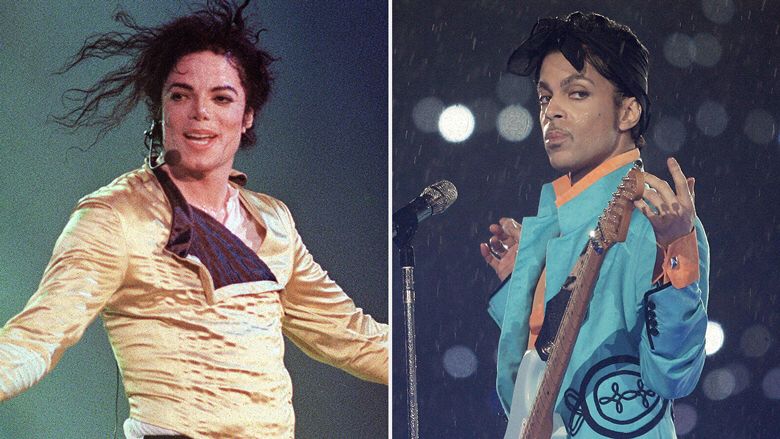
In the 1980s, American popular music had two undisputed emperors, and they could not have been more different in temperament, method, and self-presentation. Michael Jackson was global, accessible, the most famous person on earth — a man who had spent his entire life performing and had turned that lifetime of practice into something that transcended music and became mythology. Prince was smaller in commercial scale and larger in creative scope — a musician who played every instrument, produced everything himself, recorded hundreds of songs that the public never heard, and operated from a position of such supreme artistic self-confidence that collaboration felt to him like compromise.
They were aware of each other. They were competitive with each other. And the specific nature of that competition — private, unacknowledged, occasionally surfacing in sideways comments and deliberate artistic choices — is one of the most fascinating stories in popular music.
The tension was not unfriendly exactly. Jackson and Prince moved in overlapping circles. They attended some of the same events. There were periods where associates of both describe something approaching mutual respect, and periods where the rivalry sharpened into something less comfortable. Prince reportedly turned down opportunities to collaborate with Jackson, which Jackson noticed. Jackson’s commercial dominance — Thriller sold 70 million copies, a figure Prince never approached — was something Prince acknowledged only obliquely, through the quality and volume of his own output rather than through anything as graceless as public commentary.
What Prince had that Jackson did not was complete control. Jackson worked within the major label system, with producers and executives and an apparatus that, however much he influenced it, was never entirely his. Prince fought for and won ownership of his music in a battle so public and so bitter that he literally changed his name to an unpronounceable symbol during the dispute with Warner Bros. — walking around with the word “slave” written on his face to make clear how he felt about an industry that owned his catalog.
The musical competition expressed itself most directly in 1987, when Jackson released Bad and Prince released Sign ‘O’ the Times within months of each other. Bad was the bigger commercial success. Sign ‘O’ the Times is the one that music critics consistently name as the greater artistic achievement — a double album of extraordinary range and sophistication that covered funk, rock, gospel, psychedelia, and social commentary with a fluency that suggested Prince was operating in several genres simultaneously without effort. The year 1987 remains one of the most contested in popular music precisely because of what those two albums represent.
Prince died in April 2016 at 57, alone in an elevator at Paisley Park from an accidental fentanyl overdose. Jackson died in June 2009 at 50, from acute propofol intoxication administered by his personal physician. Both died far too young. Both left behind catalogs of extraordinary size and quality. Both spent their careers being compared to each other by an industry and a public that could not fully hold two geniuses simultaneously and kept trying to rank them.
The rivalry they never fully admitted was the most honest thing about both of them.