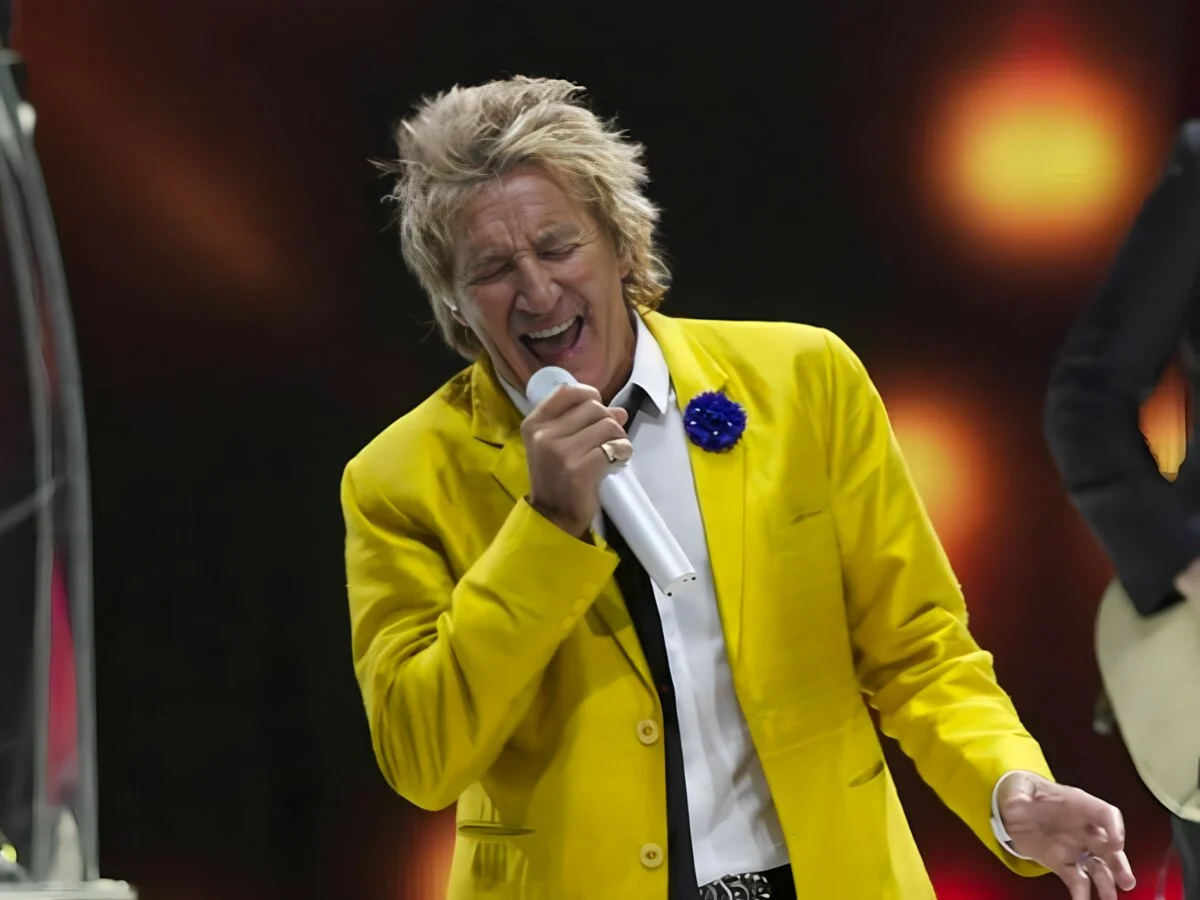
For someone like Rod Stewart, great music was never about perfection. Coming out of the blues and rock tradition, Stewart understood that some of the most powerful songs were built on raw feeling rather than polished poetry. A gritty vocal, a swaggering guitar riff, and an honest emotion could often say more than carefully crafted lines ever could.
That spirit defined many of Stewart’s biggest songs. Tracks like ‘Stay With Me’ thrived on energy, attitude, and desire rather than deep introspection. Yet beneath the raspy vocals and barroom rock and roll, Stewart always had a deep appreciation for songwriting — especially lyrics that felt authentic and human.
And for Stewart, no songwriter embodied that better than Bob Dylan.
Dylan’s Revolutionary Influence
By the time Dylan emerged in the early 1960s, folk music was still viewed as the serious alternative to rock and roll. Many critics dismissed rock as disposable entertainment, but Dylan saw something entirely different. He understood that electric guitars and rock rhythms could carry meaningful ideas to a much larger audience.
That vision exploded with albums like Bringing It All Back Home. While Dylan had already gained attention through folk classics like ‘Blowin’ in the Wind’, his shift toward electric rock changed popular music forever. Songs like ‘Mr Tambourine Man’ and ‘Like a Rolling Stone’ proved that rock music could be poetic, unpredictable, and intellectually daring without losing its emotional punch.
For Stewart, hearing Dylan was transformative.
“I love Bob Dylan. I think he is the all-time great lyricist. Not enough can be said about Bob.”
It’s easy to understand why Stewart felt that way. Dylan’s writing never sounded overly polished or calculated. His lyrics moved like real thoughts — messy, conversational, and alive. Songs such as ‘Desolation Row’ and ‘Subterranean Homesick Blues’ felt dangerous because they ignored the neat formulas of traditional pop songwriting. Dylan wasn’t interested in tidy choruses or predictable resolutions. He wanted language to tumble forward naturally, almost like overheard conversations set to music.
The Dylan Influence on Rod Stewart
Although Stewart never pursued Dylan’s surreal poetic style directly, Dylan’s influence can still be heard throughout Stewart’s finest work.
Albums like Every Picture Tells a Story revealed Stewart’s growing interest in singer-songwriter storytelling, drawing inspiration from artists like Carole King and James Taylor while still staying rooted in blues and rock and roll.
Songs such as ‘Mandolin Wind’, ‘Reason to Believe’, and ‘Maggie May’ carried the same conversational warmth that made Dylan’s work feel so relatable. Stewart’s delivery always sounded lived-in rather than overly rehearsed, giving his music an honesty that connected deeply with listeners.
That may have been the lesson Stewart admired most about Dylan: the greatest lyrics don’t necessarily sound literary — they sound human.
A Different Kind of Greatness
Stewart may never have reached Dylan’s legendary status as a lyricist, but he never needed to. His strength came from translating emotion into performance with a sincerity few singers could match.
Songs like ‘Every Picture Tells a Story’ and ‘Maggie May’ proved that Stewart understood exactly what made songwriting resonate with people. He respected the artist who redefined lyric writing in rock music, while carving out his own voice in the process.
And in many ways, that admiration says everything about Dylan’s legacy. Even artists as distinctive as Rod Stewart still looked at Bob Dylan as the gold standard — the songwriter who changed what lyrics in rock music could truly be.