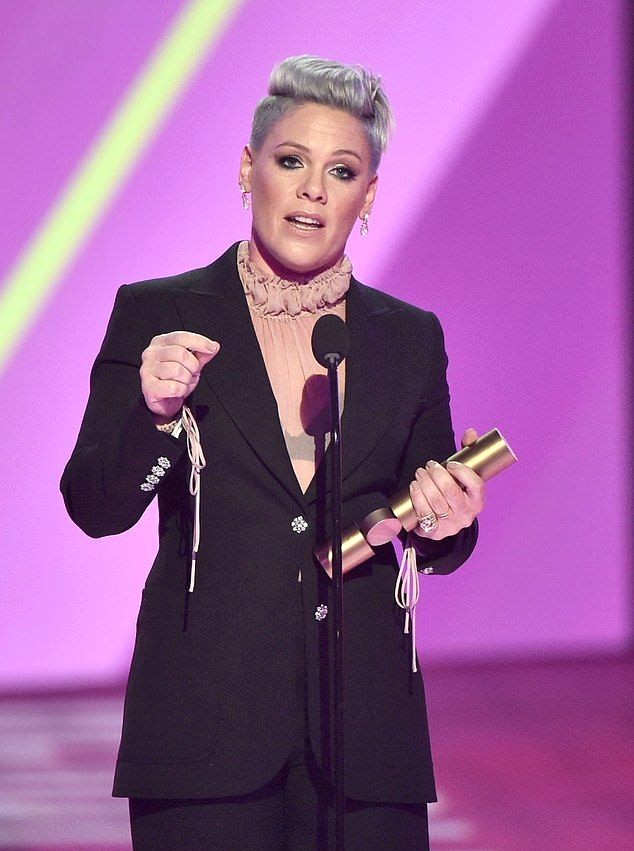
Early in her career, Pink was given a label that could have easily derailed her: she was “too edgy” for pop—and at the same time, “too pop” for rock. In an industry that often depends on neat categories, that kind of feedback can be a dead end. Artists are usually pushed to choose a lane, simplify their identity, and fit into what sells.
Pink did the opposite.
When she first emerged in the late 1990s and early 2000s, the music scene was sharply divided. Pop was polished, radio-friendly, and image-driven. Rock, on the other hand, leaned into grit, rebellion, and authenticity. Pink stood somewhere in between. She had the vocal power and emotional honesty of a rock artist, but she also had the hooks and accessibility of pop. For some executives, that made her a problem.
But for Pink, it became her greatest strength.
Instead of reshaping herself to fit expectations, she leaned into the contradiction. Her music blended raw emotion with catchy melodies, pairing deeply personal lyrics with radio-ready production. Songs could be vulnerable one moment and defiant the next. She didn’t sound like anyone else—and that made her stand out in a crowded industry.
Her attitude played a huge role as well. Pink built her reputation on honesty, often challenging industry norms around image and behavior. She wasn’t interested in being perfectly polished or predictable. That authenticity connected with listeners who felt the same way—people who didn’t quite fit into one box either.
The results spoke for themselves. Throughout the 2000s, Pink became one of the best-selling artists in the world, with multiple hit albums and a string of chart-topping singles. Her live performances, known for their energy and daring aerial stunts, only strengthened her connection with fans. She wasn’t just making music—she was creating an identity that people could relate to.
What’s most striking is how her early criticism now feels almost outdated. The idea that an artist has to be one thing or another has slowly faded, and Pink helped push that shift. Today, genre-blending is common, but at the time, it took a certain level of confidence to ignore the pressure and trust your instincts.
In the end, the very thing that made her hard to categorize is what made her unforgettable. Being “too much” for one category and “not enough” for another didn’t limit Pink—it freed her. And by refusing to choose, she built a career that proved you don’t have to fit the mold to succeed.