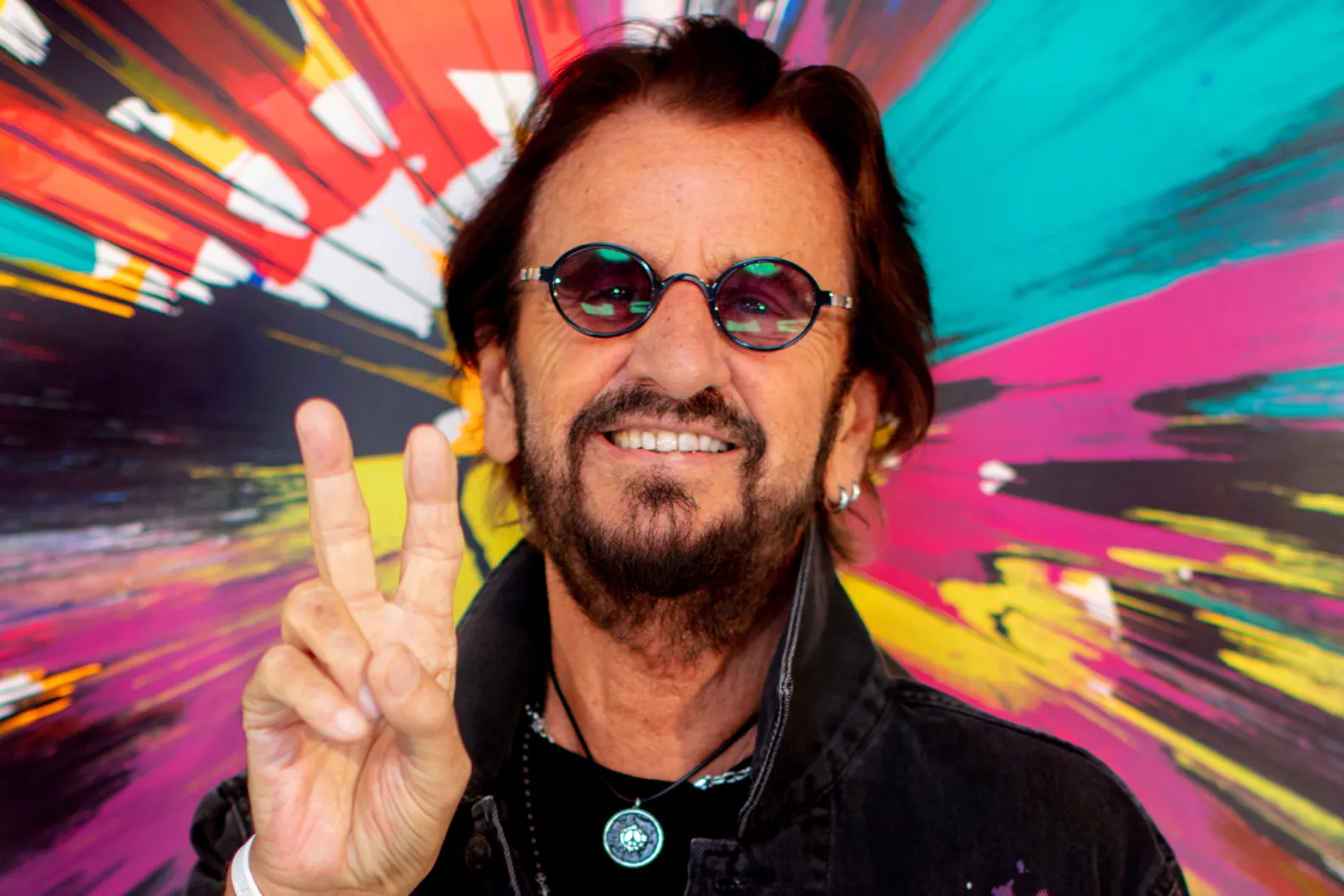
When people talk about The Beatles, the spotlight usually falls on the songwriting brilliance of Lennon and McCartney or the spiritual evolution of George Harrison. But behind all of that innovation was a steady, almost invisible force holding everything together: Ringo Starr.
At first glance, Starr’s drumming might seem simple. There are no long, flashy solos. No overwhelming displays of technical speed. But that simplicity is exactly what makes his playing so powerful—and so essential to The Beatles’ sound.
Ringo Starr didn’t play to impress. He played to serve the song.
What truly set Starr apart was his impeccable sense of timing. Not just mechanical precision, but something deeper—an internal rhythm that felt natural, almost instinctive. His bandmates famously joked that he was the band’s click track. And in many ways, that wasn’t a joke at all. Starr had the rare ability to anchor a song without making it feel rigid. His grooves breathed. They moved. They felt human.
Listen closely to The Beatles’ catalog, and you’ll start to notice how much of each song’s identity comes from his choices behind the kit. The loose, swampy groove of “Come Together.” The unconventional, almost hypnotic pattern in “Ticket to Ride.” The subtle but emotionally guiding fills in “A Day in the Life.” None of these parts are overly complex—but each one is unforgettable.
That’s because Starr understood something many musicians spend years trying to learn: the best part isn’t always the most complicated one. It’s the one that feels right.
Even Starr himself has admitted that he can’t fully explain his timing. He’s described it as something that just “happened”—a gift he feels came naturally. While other drummers might rely on click tracks to stay in time, Starr trusted his internal sense of rhythm completely. His famous remark, “I am the click,” captures that confidence perfectly. It’s not arrogance—it’s a reflection of how deeply ingrained that timing is within him.
Despite this, Starr has often been overlooked in discussions about the greatest drummers of all time. His lack of flash has, ironically, worked against him in a world that often values technical showmanship over musicality. But among musicians, his reputation tells a different story. He’s widely respected for his taste, his feel, and his ability to elevate a song without overpowering it.
In the end, Ringo Starr’s genius lies in his restraint. He knew when to play, what to play, and—just as importantly—what not to play. And in a band as revolutionary as The Beatles, that kind of intuition wasn’t just valuable. It was essential.
Sometimes, the most important voice in the music is the one that doesn’t demand attention—but quietly makes everything else possible.