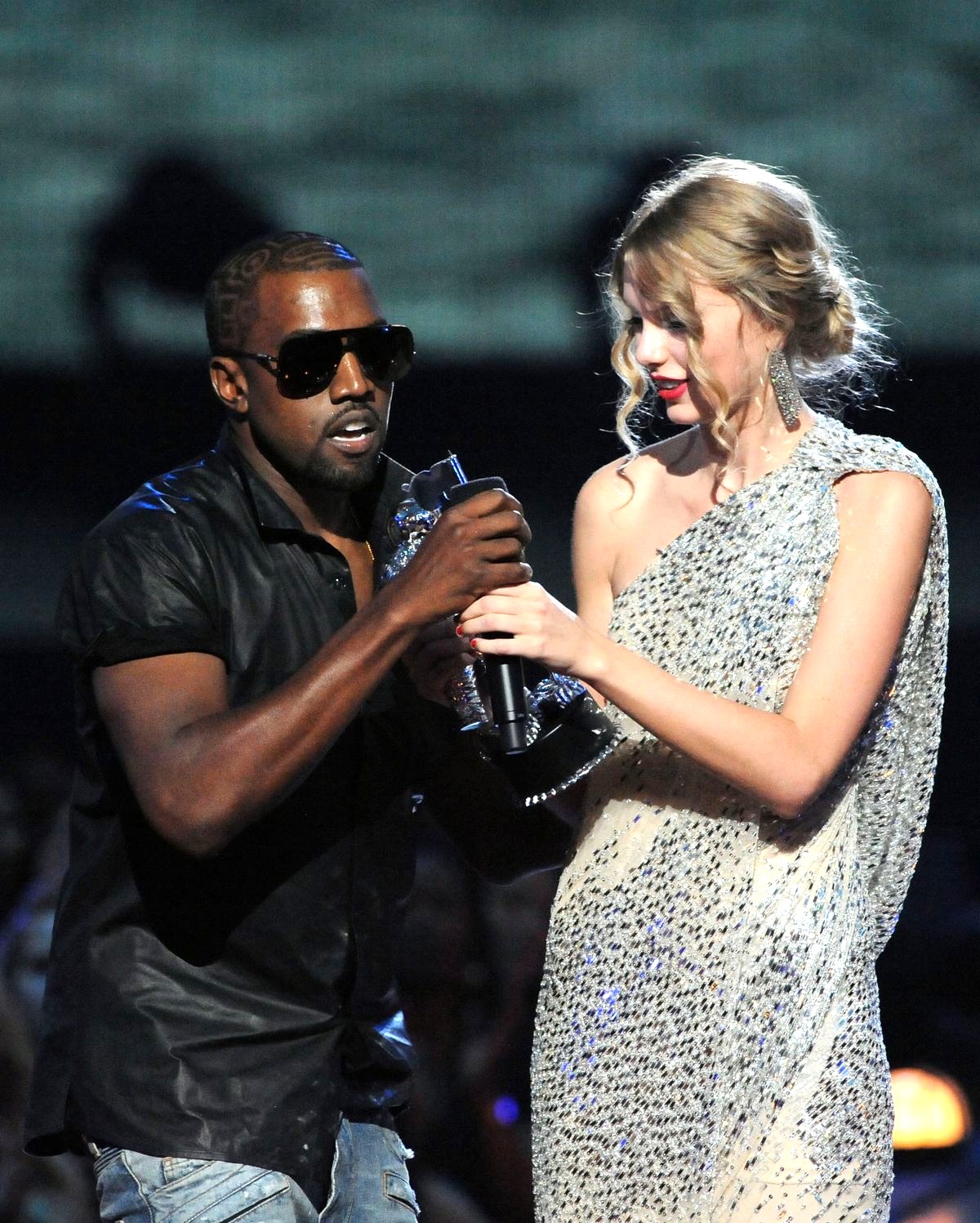
Few celebrity conflicts have lasted as long—or remained as complicated—as the feud between Taylor Swift and Kanye West. What began as a shocking moment on live television in 2009 has stretched across more than a decade, evolving through music, interviews, leaked recordings, and shifting public opinion.
At first glance, it seems like a simple story of interruption and apology. But the full timeline reveals something far more layered.
The Moment That Started It All (2009)
The feud began at the MTV Video Music Awards. As Taylor Swift accepted the award for Best Female Video, Kanye West unexpectedly walked on stage, took the microphone, and declared that Beyoncé had one of the best videos of all time.
The moment instantly became one of the most talked-about events in pop culture history. Swift was visibly stunned, and the backlash against West was immediate. He later apologized publicly, and for a time, it seemed like the situation might resolve.
A Fragile Peace (2010–2015)
In the years that followed, both artists appeared to move on—at least publicly. Taylor Swift even referenced the incident in her song Innocent, which many interpreted as a gesture of forgiveness.
By 2015, things seemed to improve. The two were photographed together, spoke kindly about each other in interviews, and even appeared to rebuild a friendly relationship. For a brief moment, it looked like the feud had ended.
But it hadn’t.
The “Famous” Fallout (2016)
Everything changed again in 2016 with the release of Kanye West’s song Famous. In it, he included a controversial lyric about Taylor Swift that reignited tensions.
West claimed that Swift had approved the line beforehand. Swift’s team denied that claim, saying she had not agreed to the specific wording. The situation quickly escalated into a public dispute about who was telling the truth.
Then came another twist.
Kim Kardashian, West’s wife at the time, released snippets of a recorded phone call between Swift and West. The clips appeared to support West’s version of events, leading to a massive wave of backlash against Swift online.
For a time, public opinion turned sharply against her.
Reputation and Reclaiming the Narrative (2017–2019)
In response, Taylor Swift stepped away from the spotlight and later returned with her album Reputation. The project leaned into the controversy, addressing themes of betrayal, public perception, and media narratives.
Songs like Look What You Made Me Do signaled a shift in how she handled criticism—less explanation, more assertion of control.
Meanwhile, Kanye West continued to address the situation in interviews and music, keeping the story alive in different ways.
The Full Call Leak (2020)
In 2020, a longer version of the original phone call between Swift and West leaked online. This time, it added more context—and complicated the story further.
The extended footage suggested that while Swift had been informed about part of the lyric, she had not been told about its most controversial line. For many observers, this shifted the narrative again, leading some to reconsider earlier assumptions about the situation.
Why It’s Still Complicated
After more than 15 years, the feud between Taylor Swift and Kanye West isn’t just about one moment—it’s about perspective, communication, and how stories are told in public.
Both sides have presented versions of events that highlight their own experiences. Swift has emphasized issues of respect and consent, while West has focused on artistic expression and prior conversations. The truth, as the timeline shows, sits somewhere in between—and is shaped by incomplete information, edited clips, and evolving narratives.
What makes the feud so enduring is how it reflects larger themes in the music industry and celebrity culture: control over one’s image, the power of media, and how quickly public opinion can shift.
In the end, it’s not just a story about two artists.
It’s a story about how moments become headlines, headlines become narratives, and narratives—once formed—can take years to fully understand.