I pulled into my driveway that rainy evening and froze. My front yard was a mess—muddy footprints crisscrossed the porch, flowerpots shattered, and the wind had blown over the small garden fence. The front door was wide open, swaying slightly in the breeze.
My hands trembled as I clutched the groceries, soaked from the storm. Six months had passed since my husband, Michael, had died of cancer. The house still smelled faintly of him—his cologne, his coffee, his favorite chair—and yet, it felt emptier than ever. I had been living alone in grief, surviving in a fog of sorrow.
I stepped inside, ready to call the police, ready to demand answers, but then I saw her. My daughter, Emma, sitting cross-legged on the living room floor, surrounded by buckets of paint and boxes of tools, tears streaming silently down her face.
“Mom,” she whispered. “I… I’m so sorry.”
I couldn’t breathe. I hadn’t heard her voice in seven years—not since our last fight, the day she stormed out of the house with her suitcase, angry over my objections to her choices. “Why… why are you here?” I managed to choke out.
She swallowed hard. “Grandma called me. Before she… before she passed. She said you were struggling, that you hadn’t been eating, that you weren’t sleeping. She said I had to come. That I had to help you.”
Grandma. Even after her death, she was the bridge trying to reconnect us. My knees buckled, and I sank into the couch, rainwater dripping from my hair and clothes.
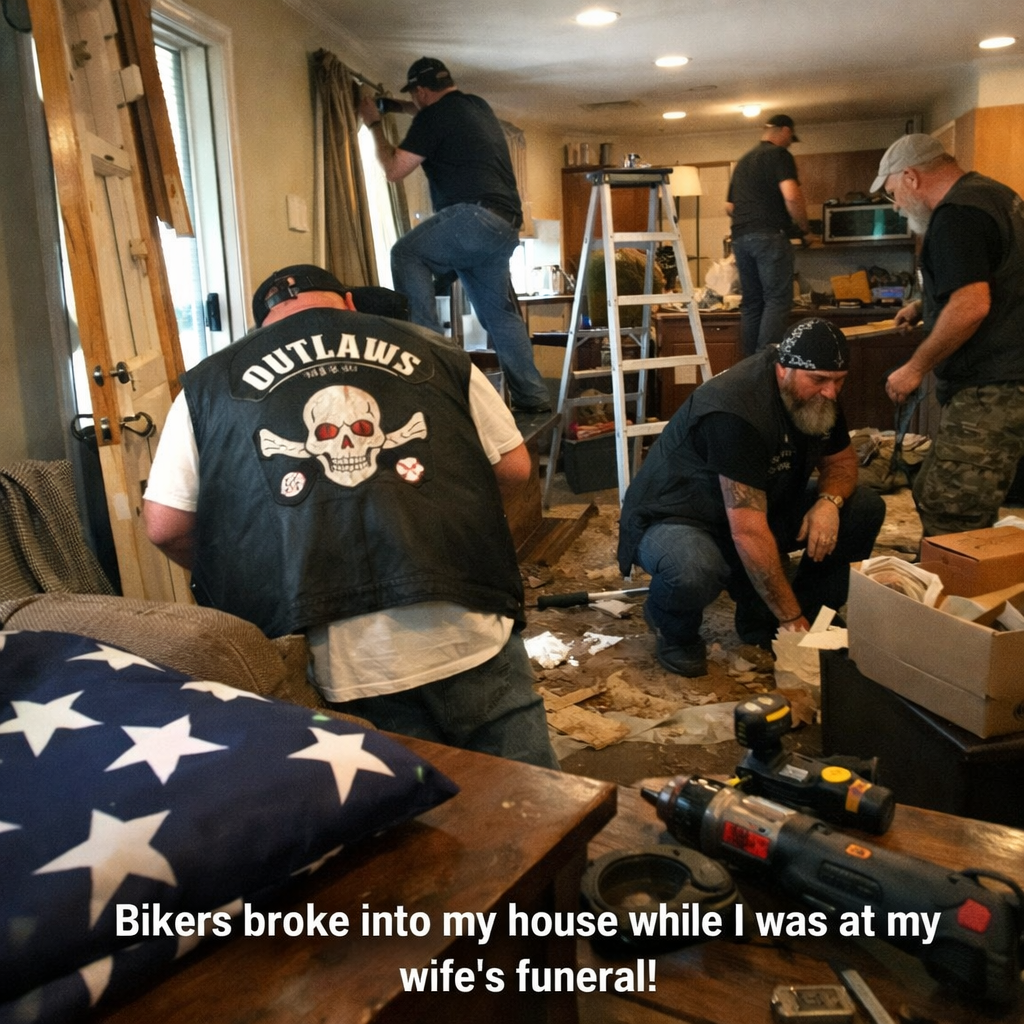
Behind Emma, six strangers quietly set down toolboxes and buckets. One of them, a tall woman with kind eyes and paint on her hands, held up a clipboard. “Your mother left us a list,” she said softly. “She wanted to make sure you were taken care of. That your home didn’t feel empty. That you didn’t have to be alone.”
I shook my head. “I… I don’t understand.”
Emma knelt beside me and handed me a small box. Inside were photographs of our happiest moments—birthdays, school plays, family vacations, and silly snapshots of Michael goofing around. Scribbled on sticky notes were small reminders: “Fix the sink. Repaint the living room. Plant flowers. Make it feel alive again.”
“They said they’d help,” Emma whispered. “All of them volunteered. They just… showed up.”
I felt my chest tighten. “I don’t deserve this,” I choked out.
“You do,” Emma said firmly. “Mom wanted you to live. To keep going. To let me help. I want to fix this… us.”
For the next three days, the house became a whirlwind of activity. Strangers painted walls, mended fences, fixed broken furniture, and cleaned the garden. Emma stayed by my side, passing me brushes, holding my hand, reminding me to eat.
At night, we shared stories we hadn’t said in years—apologies we hadn’t voiced, memories we’d left unspoken. We laughed through tears, we cried through laughter, and slowly, the space between us began to disappear.
On the second day, Emma took my hand and said, “Mom, I have someone I want you to meet.” My heart sank—I wasn’t ready for more heartbreak—but I followed her outside.
A little girl ran toward me, shouting, “Grandma!”
Lily. My granddaughter. Seven years old. I hadn’t seen her since she was a baby. She threw herself into my arms, and I felt a jolt of warmth and joy I hadn’t realized I’d been missing.
Emma smiled through her tears. “I wanted you to know her. I wanted you to be a grandmother too.”
We spent the next days together, rebuilding more than just a house. We rebuilt trust, we rebuilt laughter, and we rebuilt love. The volunteers—once strangers—were slowly becoming family. They worked tirelessly, but their smiles, their jokes, their encouragement made me realize that love could appear in the most unexpected forms.
One evening, after a long day of painting, Emma and I sat on the porch with Lily between us. The sunset reflected on the freshly painted walls, and the garden smelled like new blooms. “I can’t believe this,” I said softly. “I didn’t think I’d ever feel… happy again.”
Emma hugged me tightly. “You deserve it, Mom. We all do.”
On the fourth day, the house was transformed. The walls glowed with fresh paint, the garden was vibrant, the furniture repaired. The living room smelled like lavender and fresh wood. But the true transformation was inside us. Emma and I no longer carried the weight of years lost. Walls of resentment crumbled. Old arguments dissolved in the warmth of forgiveness.
Before leaving, the volunteers handed me envelopes. Inside were groceries, bills, and handwritten letters from my mother. One read: “You’ll pretend you don’t need help, but we’ve got you anyway. Love, Mom.”
Emma stayed. Lily stayed. Slowly, life returned—not the life we had before Michael died, but a new life, one full of laughter, hugs, and late-night conversations.
Six months later, we held a small gathering in the garden. Neighbors, friends, Emma’s friends, Lily’s classmates—all of us celebrating life, love, and resilience. I watched Emma teaching Lily to plant flowers, laughter spilling into the air. I watched them laughing together. I watched the house, once empty and cold, filled with warmth and light.
I whispered into the wind, “Thank you, Mom. Thank you for not giving up on us.”
And I knew, in that moment, that even in death, love finds a way to heal, to mend what’s broken, and to bring a family back together—sometimes through strangers, sometimes through memories, and sometimes through the unwavering force of a mother’s heart.