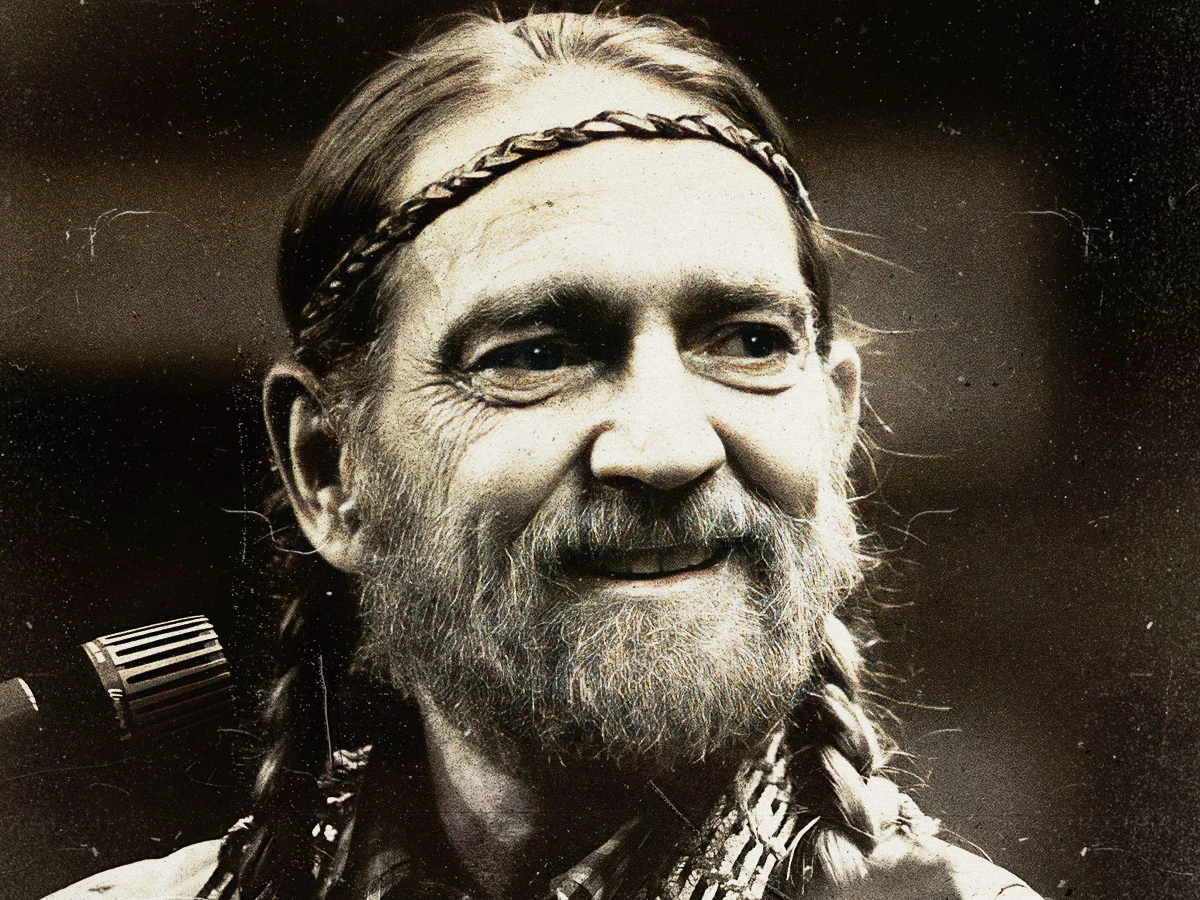
Trying to sum up Willie Nelson’s approach to music is no small task. With a catalog that spans more than 100 albums and nearly every genre imaginable, his philosophy resists easy definition. Still, one quote comes remarkably close: “According to my grandmother, the definition of music is anything that’s pleasing to the ear. Once I learned that, I quit thinking about it.”
That simple idea captures Nelson’s outlook perfectly. Throughout his career, he has never been preoccupied with genre boundaries or artistic cohesion. Whether a song fit expectations or made sense to others was secondary. What mattered most was how it sounded. If it felt right, that was enough.
Nelson often credited his grandmother for shaping that mindset, but another major influence came from one of his musical heroes: Django Reinhardt. In his writing, Nelson spoke at length about discovering the Romani guitarist and the profound impact Reinhardt’s music had on him. “No other musician has had a greater influence on me,” Nelson once said. “I felt like his guitar was talking to me. Even his sad songs were filled with joy. They were like little short stories.”
Reinhardt’s life story resonated just as deeply. After surviving a devastating caravan fire at 18 that left two fingers on his left hand partially paralyzed, Reinhardt was told he would never play guitar again. He refused to accept that fate. Instead, he adapted his technique, reinventing his style by soloing with just two fingers—and, in Nelson’s words, “he got better.”
There’s something revealing in how Nelson speaks about Reinhardt, because it mirrors his own career. Nelson never chased technical perfection or fashionable sounds. Like Reinhardt, he trusted instinct over instruction and emotion over theory. That belief explains why his music flows so naturally between outlaw country, jazz standards, pop ballads, and gospel without ever feeling disjointed.
Reinhardt’s influence on Nelson went beyond guitar playing; it became a guiding philosophy. Both artists treated music as something alive—meant to be reshaped by curiosity and courage rather than constrained by rules. Their work remains approachable and deeply human because it prioritizes feeling over form.
Though their styles and circumstances were worlds apart, Nelson and Reinhardt shared the same core belief: music doesn’t need permission to exist. A guitar doesn’t have to be played one way. An artist doesn’t have to stay in one lane. What matters most is the result—something honest, expressive, and pleasing to the ear.