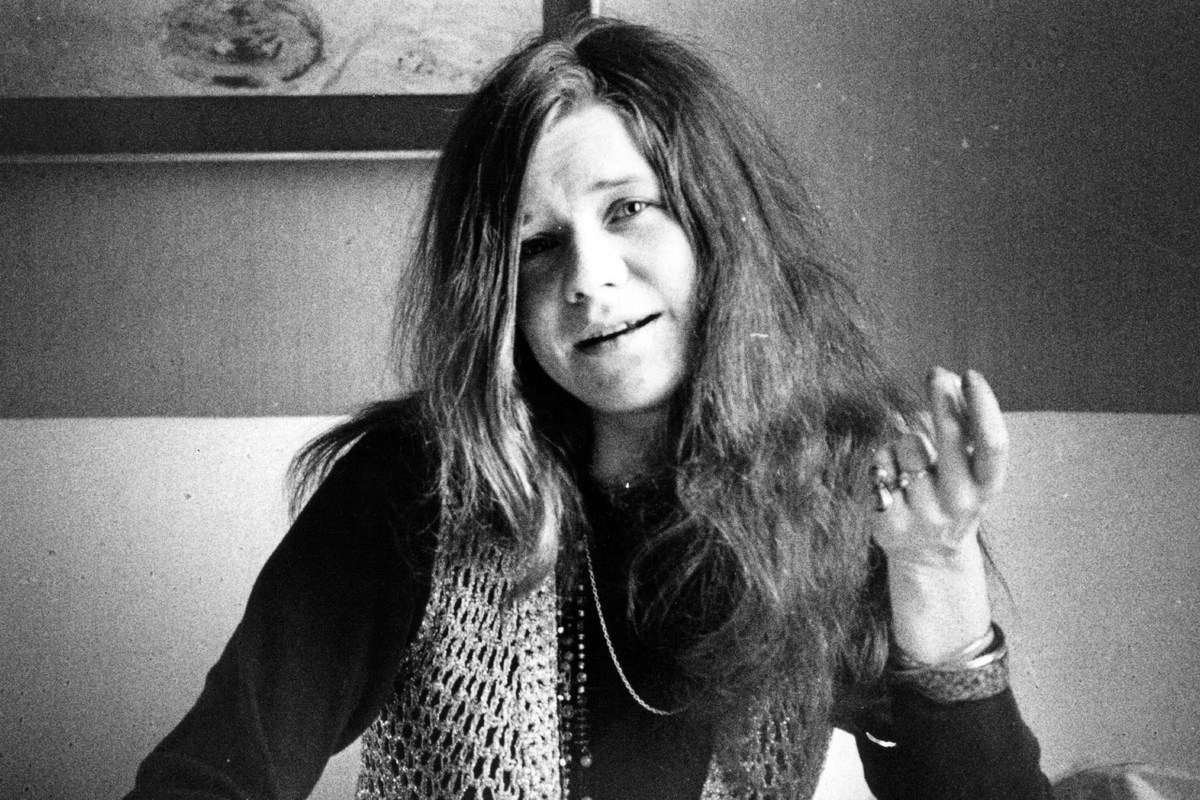
Janis Joplin’s version of “Me and Bobby McGee” stands as one of the most poignant recordings in rock history, not just because of its raw, emotive performance, but because of the tragic timing surrounding its release. Joplin recorded the song shortly before her death in October 1970, and it wasn’t released until early 1971, months after she had already passed away, going on to become her only number-one single.
The song itself was written by Kris Kristofferson, along with Fred Foster, and had already been recorded by several other artists before Joplin got hold of it, including a version by Roger Miller that had achieved modest chart success. Kristofferson has described the song as loosely inspired by real experiences of hitchhiking and freedom, filtered through a fictional narrative about two drifters traveling together before ultimately parting ways.
Joplin’s connection to Kristofferson went beyond the song itself — the two had a romantic relationship for a period, and Kristofferson has spoken about introducing her to the track sometime before her death, though accounts vary on the exact circumstances of how she came to record her now-iconic version.
What set Joplin’s rendition apart from earlier versions was the raw vulnerability she brought to the vocal performance. Recorded with her backing band, Full Tilt Boogie Band, just days before her death from a heroin overdose, the track captures Joplin’s voice at its most weathered and emotionally direct, delivering the song’s bittersweet lyrics about lost love and freedom with an intensity that feels almost prophetic in hindsight.
The song appeared on Joplin’s posthumously released album “Pearl,” which came out in January 1971 and became her most commercially successful record, eventually topping the Billboard 200 chart. “Me and Bobby McGee” itself reached number one on the Billboard Hot 100 in March of that year, making Joplin one of a small number of artists to have a chart-topping single released after their death.
Kristofferson has spoken candidly over the years about the strange, painful experience of watching a song he wrote become such a massive hit specifically because of Joplin’s death, noting the complicated mixture of pride in her performance and grief over losing a friend and former partner under such circumstances.
More than five decades later, Joplin’s version remains the definitive rendition of “Me and Bobby McGee” for most listeners, frequently cited as one of the greatest vocal performances in rock and blues history. It stands as a powerful, if heartbreaking, capstone to a career cut tragically short, offering a glimpse of the artistic heights Joplin might have continued reaching had she lived beyond the age of 27.