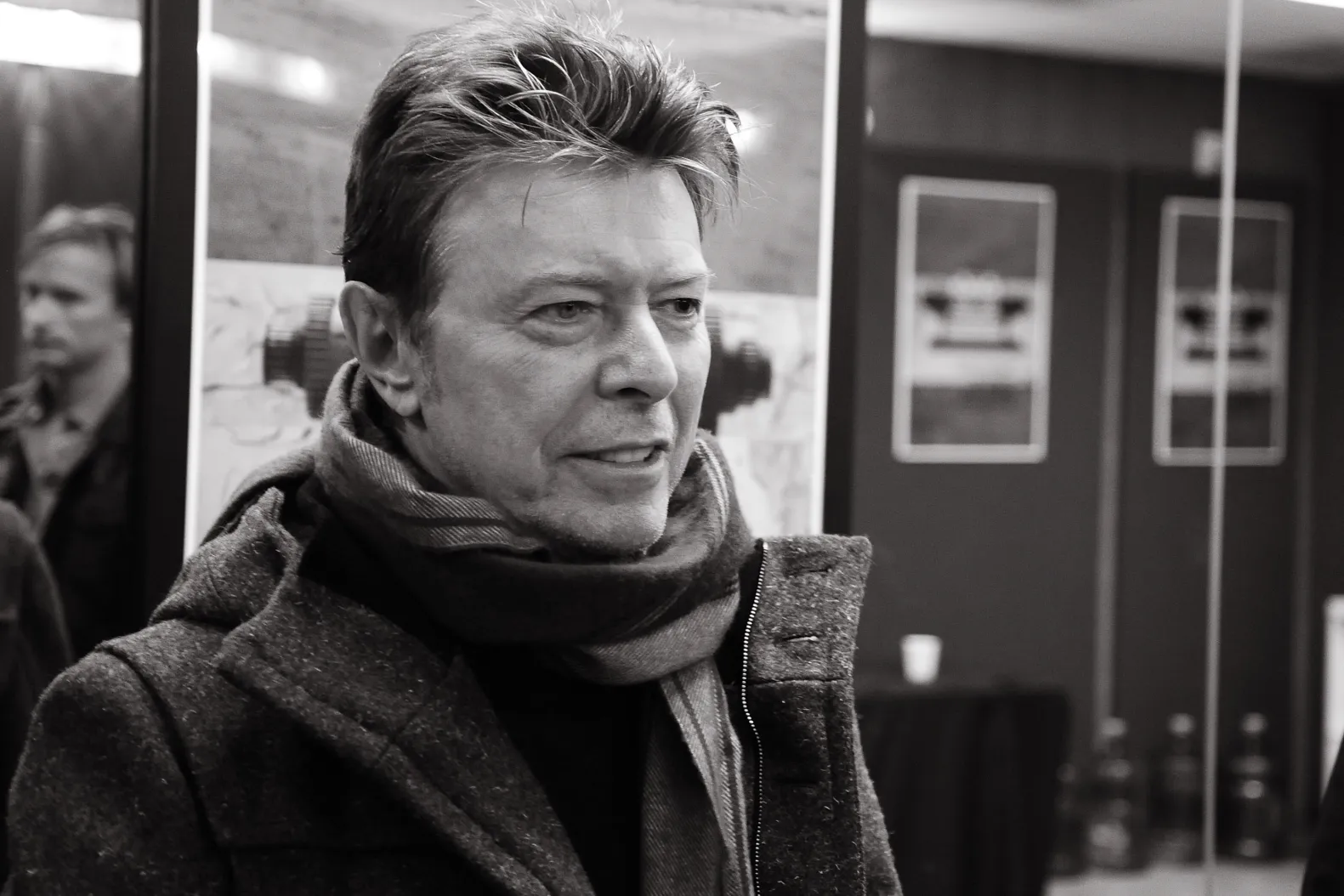
David Bowie rarely wrote straightforward love songs or obvious character studies. Instead, he transformed real people into larger-than-life figures, disguising them in poetic lyrics, futuristic imagery, and emotional ambiguity. Sometimes the people who inspired his songs knew exactly who they were. Sometimes everyone around them did too.
What makes these stories fascinating is that, in several cases, the subjects were still very much alive when the songs were released. They heard themselves reflected in Bowie’s music, yet chose not to publicly challenge or explain the connection. Whether out of respect, affection, or simple understanding of Bowie’s artistic process, silence became part of the story.
Here are five Bowie songs inspired by living people who recognized themselves in his work.
1. “The Jean Genie” — Inspired by Iggy Pop
One of Bowie’s most celebrated glam-rock anthems owes much of its swagger to his longtime friend and collaborator, Iggy Pop. While Bowie insisted the song wasn’t a literal portrait, he admitted that the character’s attitude, energy, and unpredictable nature were largely inspired by Iggy during their early years together.
The title cleverly references French writer Jean Genet, blending literary influence with rock-and-roll mythology. The result is a fictional character carrying unmistakable traces of Iggy Pop’s personality.
Iggy never publicly objected to the connection. In fact, given the close creative partnership the two shared throughout the 1970s, he appeared to embrace Bowie’s artistic interpretation without ever needing to explain it.
2. “Andy Warhol” — Inspired by Andy Warhol
Released on Hunky Dory in 1971, “Andy Warhol” is one of Bowie’s most direct tributes to a living cultural icon. Bowie admired Warhol’s ability to blur the boundaries between celebrity, art, and commerce long before those ideas became mainstream.
When Bowie eventually met Warhol, accounts suggest the encounter was famously awkward. Warhol reportedly listened to the song with little visible reaction, leaving Bowie uncertain about what he thought.
Despite hearing a song written entirely about him, Warhol never publicly criticized it. His silence only added another layer of mystery to a relationship built on mutual fascination.
3. “Lady Stardust” — Inspired by Marc Bolan
Although many listeners assumed “Lady Stardust” was about Bowie’s own Ziggy Stardust persona, Bowie later acknowledged that his friend Marc Bolan provided much of the inspiration.
Bolan, frontman of T. Rex, was already redefining glam rock with glitter, curls, and flamboyant stage performances. Bowie admired both his charisma and his willingness to challenge traditional ideas of masculinity on stage.
The song isn’t a biography but rather a celebration of individuality and performance. Bolan never publicly disputed the connection, allowing the song to remain a respectful tribute between two pioneers of glam rock.
4. “Song for Bob Dylan” — Inspired by Bob Dylan
Unlike the other entries on this list, Bowie didn’t hide the identity of his subject. “Song for Bob Dylan,” also from Hunky Dory, openly addresses one of Bowie’s greatest musical heroes.
At the time, Bowie hoped Dylan would rediscover the fearless voice that had transformed folk music during the 1960s. Rather than criticizing him, Bowie challenged his idol to continue leading artistic change.
Dylan heard the song but never publicly offered much commentary. His silence left listeners to interpret whether he viewed it as admiration, friendly advice, or simply another musician paying tribute.
5. “Kooks” — Written for His Son Duncan Jones
“Kooks” stands apart because its subject wasn’t another celebrity or artistic influence. Bowie wrote it shortly after the birth of his son, Duncan Jones, who was very much alive—and only a few days old—when Bowie performed the song for the first time.
The lyrics are filled with warmth, humor, and gentle promises about growing up in an unconventional family. As Duncan matured, he became well aware that one of his father’s most beloved songs had been written specifically for him.
Rather than turning it into a public talking point, Duncan has generally allowed the song to speak for itself, appreciating it as an intimate family gift preserved forever on record.
The Beauty of Bowie’s Quiet Portraits
David Bowie understood that songs didn’t have to function as biographies. He borrowed pieces of real people, blended them with imagination, and created characters that often became larger than the individuals who inspired them.
For those who recognized themselves in his music, there was rarely a need for public explanation. The songs existed as artistic conversations rather than factual accounts, and perhaps that is why so many of Bowie’s subjects simply listened, smiled, and let the music tell its own story.
Sometimes the loudest response to being immortalized in song is saying nothing at all.