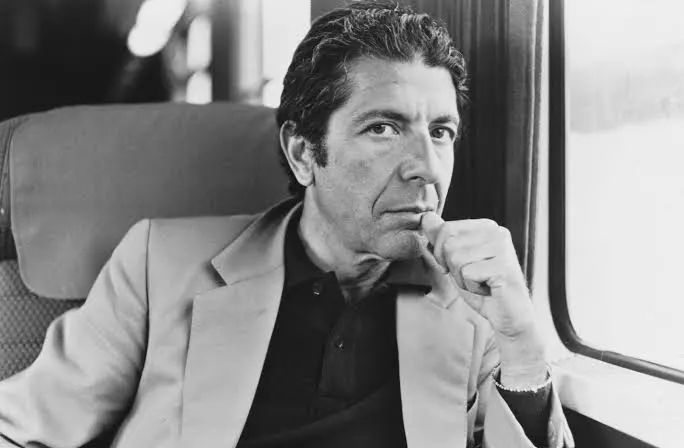
Leonard Cohen published his first book of poetry in 1956. He began recording music in 1967, at the age of 32 — late, by the standards of popular music, which tends to reward youth and treat age as a liability rather than an asset. He spent the following fifty years making records that sold modestly by pop standards and that were cited by musicians of every genre as foundational to their understanding of what a lyric could be and what a song could attempt. He died in November 2016, four weeks after releasing You Want It Darker — an album recorded in the knowledge that he was dying, that opens with “I’m ready, my lord,” that contains some of the finest writing of his career.
The musicians who have spoken about Cohen’s effect on their own songwriting do so with a consistency of response that suggests they are describing the same experience — the experience of reading a Cohen lyric and understanding, with an immediacy that is uncomfortable as well as illuminating, that what you had been doing when you thought you were writing was something considerably less than what he was doing.
1. Bob Dylan
The most celebrated of all the assessments — Dylan told a journalist that he once asked Cohen how long it took him to write Hallelujah. Cohen said two years. Cohen asked Dylan how long it took him to write I and I — one of Dylan’s Infidels tracks. Dylan said fifteen minutes. Dylan has said this story illustrates the difference in their methods — that Cohen’s patience and his willingness to remain inside a single song until it was right represented an approach to composition that Dylan’s own instinct toward accumulation and movement does not accommodate. He has said this with admiration rather than self-deprecation.
2. Bono
Bono has cited Cohen in interviews across three decades as the songwriter who most consistently makes him feel that his own lyric writing, however accomplished, is operating in a different and smaller register. He has been specific about what Cohen does that he cannot do — the combination of erotic imagery and spiritual content, the ability to be simultaneously sacred and profane within the same line, in a way that neither cancels the other nor creates irony but produces something that feels like the fullest possible statement of human experience.
3. Nick Cave
Cave has written about Cohen extensively and has spoken about him in interviews with the specific vocabulary of a fellow craftsman examining another craftsman’s tools. He has said Cohen’s late work — specifically You Want It Darker and its predecessor Popular Problems — demonstrated that aging in music, when approached with the commitment Cohen brought to it, produces a quality of writing that youth cannot access. He has said this without apparent consolation for himself, simply as an observation about what Cohen’s late albums contain.
4. Joni Mitchell
Mitchell and Cohen were contemporaries in the Montreal folk scene before either was nationally known — they knew each other when knowing each other was a matter of proximity rather than fame, and Mitchell has spoken about that early period with the specific warmth of someone describing something that preceded everything that followed. She has said Cohen’s lyric writing was the standard against which she measured her own, and that it remained the standard throughout her career.
5. Elvis Costello
Costello has been one of the most persistent and most specific public champions of Cohen’s work across four decades of critical commentary. He has cited specific Cohen lines — specific images, specific moments of compression — as examples of what lyric writing can achieve when the writer refuses to settle for approximation. He has said that Cohen’s influence on his own work is direct and traceable and that he has never felt the influence diminish as his own craft has developed.
6. Rufus Wainwright
Wainwright’s relationship with Cohen’s work is perhaps the most intimate on this list — he has performed Hallelujah more times than any other artist and has spoken about the experience of living inside a song of that quality across hundreds of performances. He has said that no familiarity with the song reduces its effect — that he has performed it so many times he knows every word in his sleep, and that it still lands differently each time, which is the definition of a song that is larger than any single performance of it.
Cohen was asked, late in his life, how he felt about the reverence with which other musicians discussed his work. He said he found it puzzling, because from the inside the work felt insufficient — that the songs were what survived from attempts at something he could never quite fully reach. He said this without false modesty. He said it as someone reporting what he genuinely experienced. The gap between what Cohen thought he was achieving and what everyone around him heard is the gap that defines the greatest artists — they are always reaching for something beyond what they have produced, and the reaching is what produces the extraordinary.