The rain hadn’t let up all afternoon. It poured, relentless, against the windows of the small blue house at the corner of Elm and Fifth. The kind of storm that soaked the streets and blurred the streetlights, turning the world into a wash of gray. For most, it was just another miserable day of wind and water, but for the neighbors on this particular street, it was about to become a day they’d never forget.
I was one of the curious ones, and I lived two houses down from the little blue one. The house had always seemed out of place — small, weathered, yet somehow vibrant, with its peeling blue paint and bright yellow front door. No one ever really saw the family that lived there. At least, no one I knew. Every time I tried to catch a glimpse, the windows would always be covered, or the curtains drawn tight. And the man who lived there, the father figure, was a mystery to the entire block. He wasn’t like the other dads I’d seen at PTA meetings or the little league games — the kind of men who mowed their lawns every weekend and talked about the weather. No, this man was different. I’d only seen him once, just a quick flash of a gray beard and rough hands as he disappeared behind the door. I had no idea what to make of him, but my gut always told me there was more to this family than met the eye.
And then, that evening, it happened.
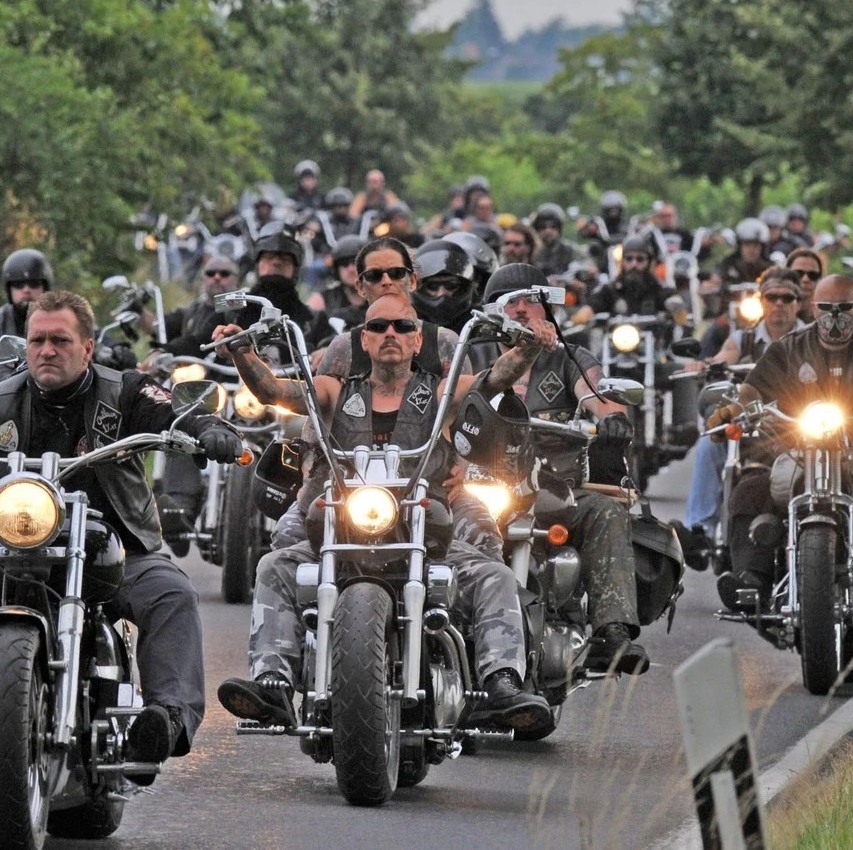
It started quietly enough. I was sitting by my kitchen window, watching the rain fall in sheets, when I noticed the rumble of engines. It wasn’t the usual hum of passing cars, or even the occasional thunderclap from the storm. No, this was something deeper. Something that felt like it came from the ground itself. I turned my head to the street and saw them — a line of motorcycles, dozens of them, their engines roaring as they rolled down the soaked street, headlights cutting through the rain like beacons in the dark.
My heart skipped a beat. Bikers.
But these weren’t just any bikers. They wore leather jackets and vests, all emblazoned with patches and insignia I couldn’t make out from my window. I wasn’t familiar with any of them, but the sheer number of bikes — at least forty — made my pulse race. I instinctively felt a sense of unease.
The rain was coming down harder now, the droplets clinging to the glass. I watched as the bikers began to pull into the street in front of the little blue house. They parked in a neat row, the engines humming low, their tires screeching as they slid slightly on the wet pavement. One by one, they dismounted, their heavy boots splashing through puddles as they stood around their bikes. The street was growing quieter, except for the sound of the rain and the low murmurs of the bikers.
Something was off. The street, which had been full of life just an hour ago, now seemed eerily silent. People peeked through their windows, eyes wide with fear and curiosity. I wasn’t the only one watching. The entire block was on edge. I could feel it in the air.
Minutes later, I saw one of the neighbors, Mrs. Johnson, hurriedly walking toward her front door, a cell phone pressed to her ear. She was whispering frantically, probably calling the police. I didn’t blame her. The tension was palpable. People had heard the rumors — the ones about gangs, the ones about bikers and their reputation for trouble. I watched her disappear inside her house and then saw others doing the same, hiding behind their curtains, whispering about what was happening.
I wasn’t sure what to think. But what I did know was that this wasn’t the kind of gathering that happened every day. And the way the bikers stood in front of the blue house, as if they were waiting for something — or someone — it made me feel like something was about to go down.
The police arrived shortly after. They rolled up with their lights flashing, but no sirens. It was like they were trying to avoid drawing attention. Two patrol cars pulled up to the curb, and three officers stepped out, their hands instinctively resting on the holsters of their guns. They looked at the bikers and then at each other, unsure of what to do next. They spoke in low voices, probably trying to figure out whether they should approach or wait for backup.
But just as the tension seemed to reach its breaking point, the front door of the blue house creaked open. My heart skipped another beat. From where I stood, I couldn’t see the person who opened it at first, but I could tell from the way the bikers stood at attention that this wasn’t an ordinary person.
And then, from behind the door, a little girl stepped out.
She couldn’t have been more than six or seven years old, with messy blonde hair and a look of curiosity in her wide eyes. She wore a bright yellow raincoat, the kind that was too big for her, and her small boots splashed through the puddles as she stepped onto the porch.
“Are you Daddy’s friends?” she asked in a small voice, looking up at the bikers as if they were the most normal thing in the world.
The silence that followed her question was deafening. The officers were still standing, frozen in place, as if unsure whether to draw their weapons or wait for an explanation. But the bikers? They didn’t move. They didn’t speak. It was like the entire street held its breath.
The man I had seen only once before, the one with the gray beard, stepped forward. His large frame loomed over the little girl as he crouched down to her level. There was a softness in his eyes, a quiet understanding, as he looked at her.
“Yeah,” he said, his voice low, rough, but kind. “We’re Daddy’s friends.”
He slowly removed his helmet, revealing his graying beard, his rugged face, and his eyes that were more tired than menacing. The other bikers followed suit, removing their helmets as well. The street, the world, seemed to pause as they did. And then, in a moment so quiet it felt sacred, the man reached out, placing a hand on the little girl’s shoulder.
“We’re here for you,” he said, his voice so soft the officers actually lowered their hands. “We promised him we’d be here.”
I couldn’t believe what I was hearing. There was no threat in his voice, no intimidation. Just a calm certainty that somehow seemed to soften the tension in the air. He wasn’t here for trouble. He wasn’t here for anything other than what he’d promised.
The little girl smiled up at him, seemingly reassured by his presence. She took a small step forward and looked at the officers, then back at the bikers. “Are you here to take care of Mommy?” she asked, her voice still small but filled with the innocence only a child could possess.
The man hesitated for a moment, as if struggling to find the right words. But then he nodded, a single tear slipping down his weathered cheek. “Yes, sweetheart. We’re here to take care of everything.”
I could feel the air shift. The police officers, still unsure, finally lowered their hands entirely. The bikers, with their intimidating appearances, were no longer seen as a threat. They weren’t here to intimidate or cause trouble. They were here to fulfill a promise. And they did so with dignity and tenderness that seemed out of place for men who looked as if they had lived their lives on the edge.
The little girl, satisfied with the answer, smiled again, and without another word, she turned back into the house. The door closed softly behind her.
The bikers, one by one, climbed back onto their bikes. The man with the gray beard gave one last look toward the officers, who were still standing, frozen in place, before giving a slight nod. It was a gesture that held years of stories and unsaid promises.
As the bikers revved their engines and began to pull away, I stood there, my heart heavy with the realization that sometimes, the world isn’t as simple as it seems. Sometimes, the people who look the scariest on the outside are the ones with the most kindness and compassion to give.
The rain still fell, but it felt like the storm had passed. For the first time, the little blue house no longer felt like a place of mystery or fear. It felt like a home — a place of safety, of love, and of promises kept.